

Can Your Air Conditioner Spread Mould Through Your Home?

Most people rely on their air conditioning every day without really thinking about what could be building up inside the system over time. But in humid areas like Northern NSW and the Gold Coast, air conditioner mould can become a significant issue within homes, particularly where systems haven’t been professionally cleaned or maintained regularly.
If you’ve noticed musty smells when the system turns on, mould around vents, recurring ceiling staining, or rooms that always feel damp or stale, your air conditioning system could be contributing more than you realise.

How Does Mould End Up In Air Conditioning Systems?
Air conditioners naturally create condensation while they operate. Over time, moisture combined with dust, dirt, and organic debris can create an environment where air conditioner mould may begin to develop inside the system.
This is especially common in:
Ducted air conditioning systems
Ceiling vents and diffusers
Filters and internal components
Drainage trays and condensate lines
Systems that haven’t been professionally cleaned in some time
In humid climates, this build-up can happen much faster than people expect.
Can Air Conditioner Mould Spread Through Your Home?
In some situations, yes.
Ducted systems continuously circulate air throughout multiple rooms of a property. If contamination is present within parts of the system, airborne particulates and air conditioner mould spores can potentially move through the home during operation.
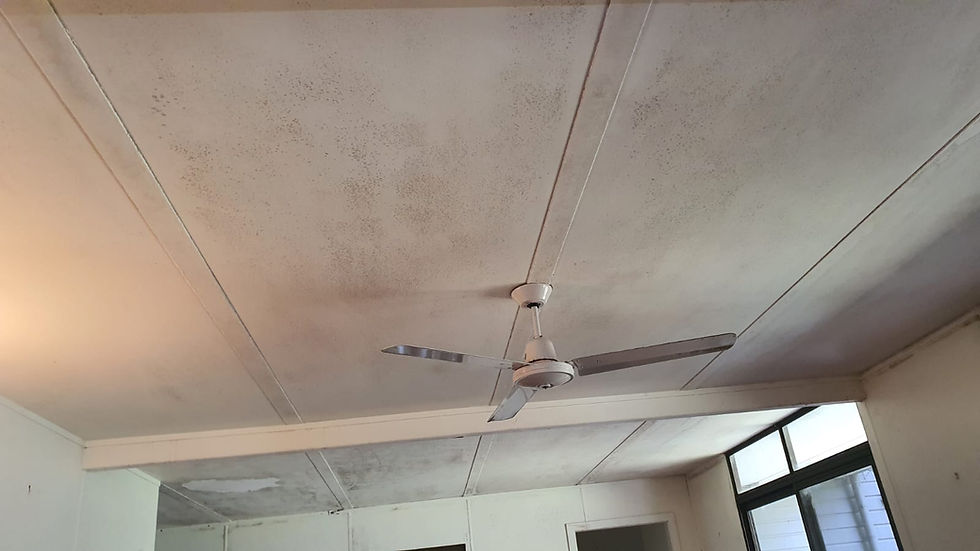
Quite often, the mould visible around vents or on ceilings is only part of the issue. In many homes we attend, there is also a combination of condensation, dust accumulation, poor ventilation, or long-term lack of maintenance contributing to the problem.
That doesn’t always mean the entire system is heavily contaminated, but it is definitely something that shouldn’t be ignored.
Common Signs Of Air Conditioner Mould In Your Home
Some common signs include:
A musty smell when the air conditioning starts
Mould around vents or diffusers
Dark staining on ceilings near vents
Excessive dust around outlets
Recurring mould that keeps returning after cleaning
Damp or stale-smelling rooms
Increased condensation around vents
Allergy-like symptoms worsening indoors
Sometimes people assume they have a roof leak when the issue may actually be related to condensation from the air conditioning system itself.
Why Surface Cleaning Often Doesn’t Fix Air Conditioner Mould
A lot of people try wiping visible mould from vents or spraying supermarket products onto the affected areas. While this may improve the appearance temporarily, it often doesn’t address what’s happening deeper within the system or the environmental conditions contributing to the issue.
If moisture, dust, and contamination remain present, air conditioner mould will often continue returning.
When Was Your Air Conditioner Last Professionally Cleaned?
This is something many homeowners simply don’t think about.
If your air conditioning system hasn’t been professionally cleaned in over 12 months, there is a very good chance there will be significant dust, debris, and air conditioner mould build-up within the system.
People are often genuinely surprised by the findings once units are properly opened up and cleaned professionally, particularly in homes located in humid coastal environments.
Regular professional cleaning is important not only for the performance of the system, but also for helping maintain healthier indoor environmental conditions.

Air Conditioning & Humidity Go Hand In Hand
Across Northern NSW and the Gold Coast, humidity and condensation are some of the biggest contributors to mould growth in homes.
We commonly see issues caused by:
Poor ventilation
High indoor humidity
Incorrect air conditioning settings
Oversized systems
Lack of servicing
Condensation build-up around vents
Homes being kept closed up for long periods
Over time, these conditions can contribute to ongoing mould issues throughout the property.
What Should You Do If You Suspect A Problem?
If you’re noticing musty smells, recurring mould around vents, or ongoing indoor air quality concerns, it’s important not to leave it too long.
Professional air conditioning hygiene cleaning and mould remediation can help address built-up contamination and identify contributing moisture or environmental issues within the home.
At Mould Wizards, we provide mould inspections, remediation, and air conditioning hygiene services across Northern New South Wales and the Gold Coast.


The article highlights a crucial yet often overlooked aspect of home maintenance, particularly in humid regions. Many homeowners underestimate the impact of air conditioner mould, which can significantly affect indoor air quality. Regular checks are essential, and the mention of Fast Payout for professional cleaning services adds an interesting dimension, suggesting financial incentives might encourage better maintenance practices.
The article presents an interesting solution for managing tax deadlines, which is crucial for both individuals and businesses. However, it overlooks the need for education on financial literacy. Many people still struggle with understanding their obligations, similar to how some may approach gambling like https://www.arg.org.nz/ Just as responsible play is vital in gambling, understanding tax responsibilities is essential for financial health.
I notice that the treatment of uncertainty is measured and honest. Data integrity is preserved throughout the analysis. The website supplies further evidence supporting the main argument. Service utilisation trends align with broader local digital ecosystem dynamics.